Shopify is a powerful platform for ecommerce brands, but not every product fits neatly into a simple product page with a few variants.
For many brands, selling online means more than choosing a size, color, or quantity. Customers may need to select materials, finishes, add-ons, engraving, dimensions, bundle items, or personalized details before they can complete a purchase.
That is where a custom product configurator becomes essential.
A product configurator turns a complex product decision into a guided shopping experience. Instead of overwhelming customers with long option lists, confusing variant combinations, or multiple product pages, it helps them build exactly what they want, step by step.
At Nethype, we design and develop custom Shopify product configurators for brands that need more flexibility than standard product variants or off-the-shelf apps can provide.
If your Shopify store needs a custom product configurator, product builder, or advanced shopping flow, contact us at info@nethype.co
A Shopify product configurator is a custom interface that allows customers to personalize, build, or configure a product before adding it to cart.
Depending on the product, a configurator can include:
Instead of presenting all options at once, the configurator guides the customer through the buying process in a more intentional way.
For brands selling custom, premium, technical, or made-to-order products, this can make the difference between a confused visitor and a confident buyer.
Shopify variants work well for simple products.
For example:
A t-shirt available in three sizes and four colors can usually be handled with standard variants.
But problems start when the product logic becomes more complex.
Imagine a brand selling custom jewelry. The customer may need to choose the metal, stone, chain length, engraving, gift packaging, and delivery option. Some choices may depend on previous selections. Some options may increase the price. Some combinations may not be available.
Trying to force this into standard variants can quickly become messy.
The product page becomes harder to manage, harder to shop, and harder to scale.
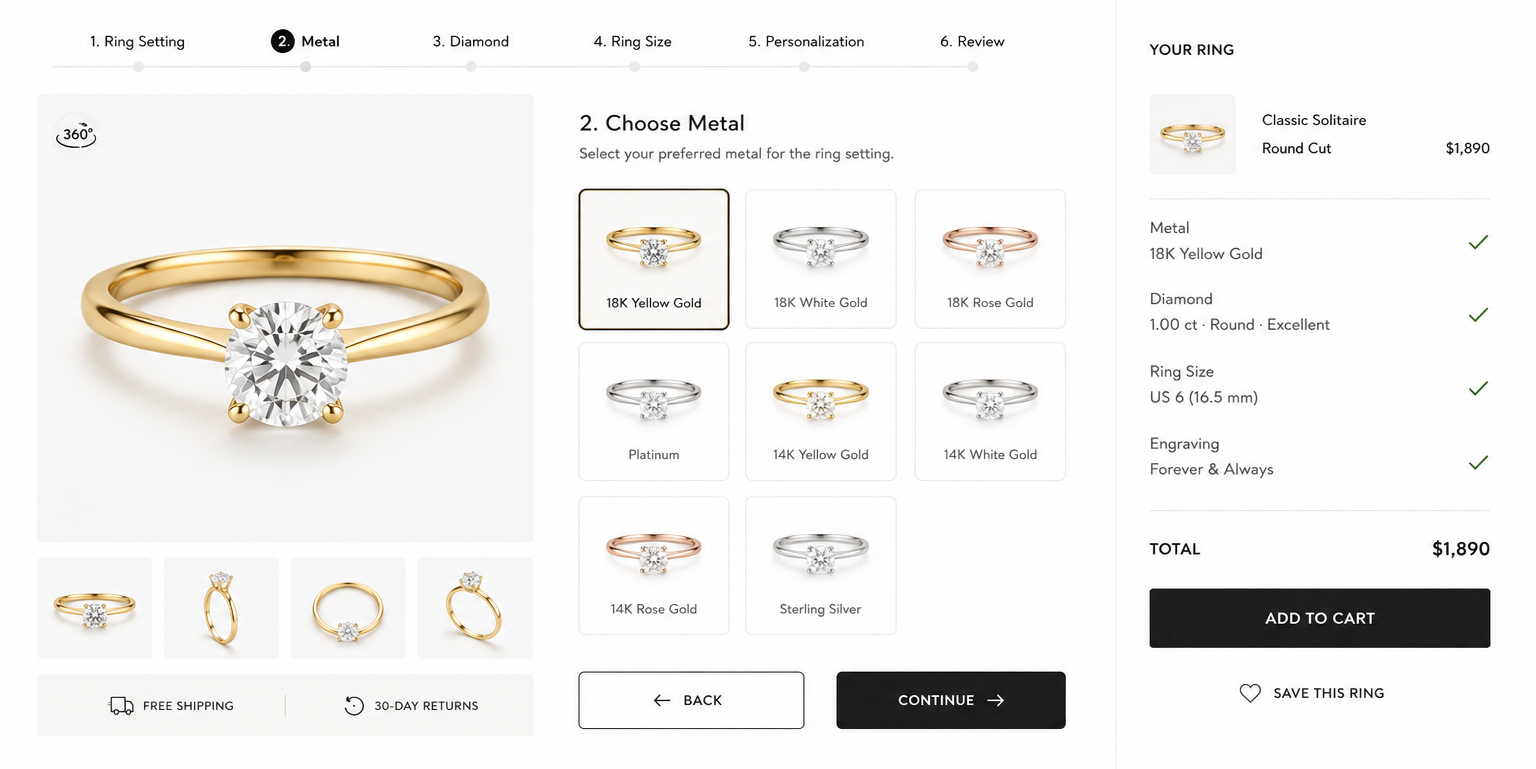
A custom configurator is usually a better solution when:
The goal is not just to add more options. The goal is to make the buying process feel simple, clear, and premium.
If your current product page or product options app no longer supports the way your products are sold, contact us at info@nethype.co
Many Shopify stores start with a product options app. For simple use cases, this can be a good solution.
Apps can help you add text fields, checkboxes, dropdowns, or basic personalization options without custom development.
But as the store grows, apps often start to create limitations.
Common problems include:
A custom product configurator gives you more control over how the experience looks, works, and connects with the rest of your Shopify store.
It can be designed around your exact product logic, your visual identity, your operational process, and your customer journey.
For brands where the product configuration is central to the purchase decision, a generic app is often not enough.
A custom configurator can be simple or advanced, depending on the product and business model.
Here are some common elements we can design and develop for Shopify stores.
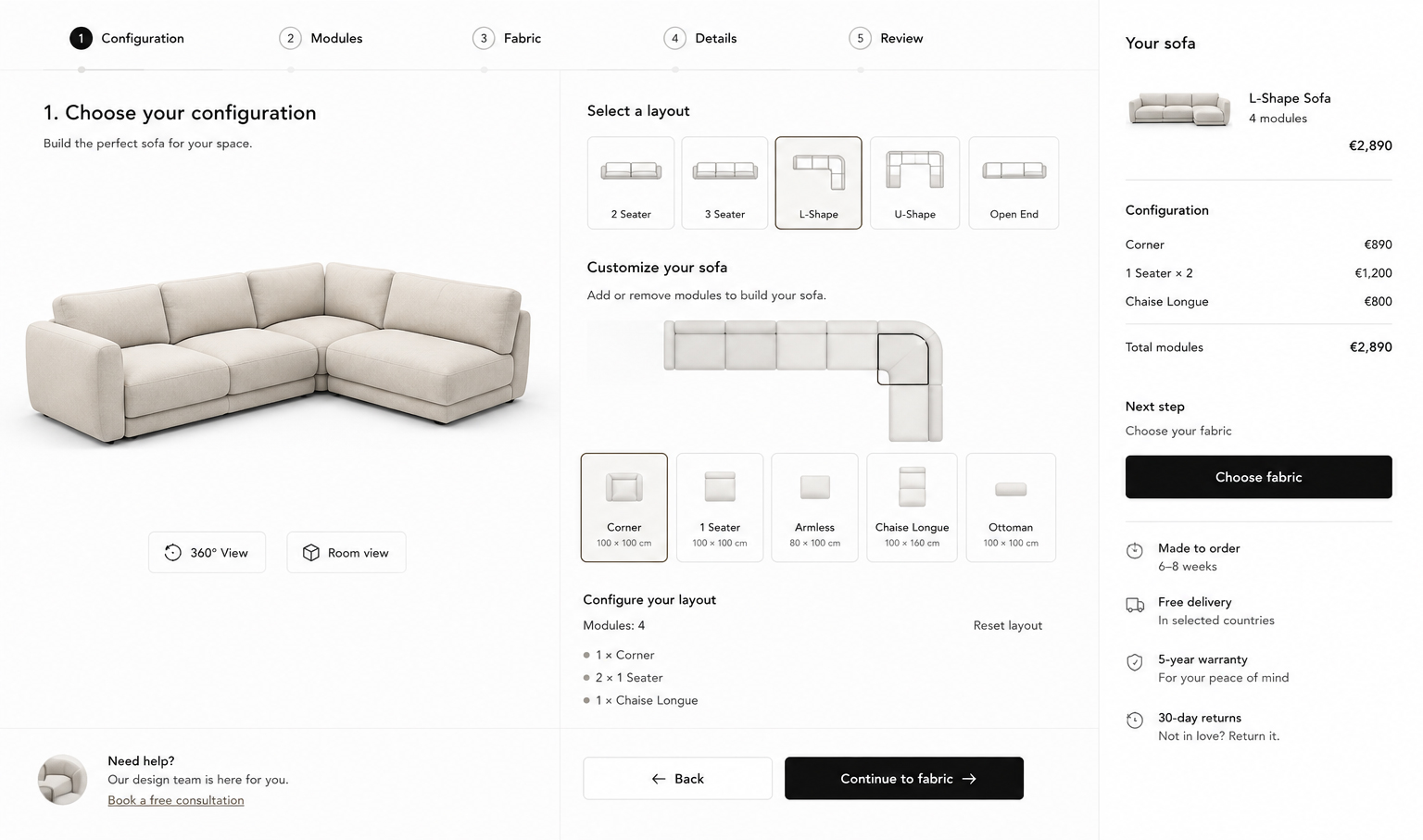
Instead of placing every option on one product page, the configurator can divide the process into clear steps.
For example:
This works especially well for products that require several decisions before purchase.
A guided flow reduces friction and helps the customer understand what they are building.
Not every option should always be visible.
A custom configurator can show or hide options based on previous choices.
For example:
If a customer chooses “gold”, the configurator can show gold-specific finishes.
If they choose a certain product size, it can display only compatible add-ons.
If they select a premium package, it can unlock additional customization options.
This creates a cleaner interface and prevents customers from choosing invalid combinations.
Some product choices may increase or decrease the final price.
A custom configurator can update the price in real time as the customer makes selections.
This is useful for:
Dynamic pricing gives customers transparency and reduces surprises at checkout.
If your store needs dynamic pricing or custom product logic, contact us at info@nethype.co
For many brands, a configurator should not feel like a form. It should feel like a visual shopping experience.
A custom Shopify configurator can include visual previews that change based on selected options.
This can work through:
This is especially valuable for fashion, jewelry, furniture, beauty, home decor, stationery, flooring, and premium gifting brands.
The more confident a customer feels about the final product, the more likely they are to complete the purchase.
If your brand offers personalized products, the configurator can collect custom details from the customer.
Examples include:
These details can be saved with the cart item and passed into the order, so your team receives the information needed to fulfill the product correctly.
This is especially important for brands where incorrect personalization can lead to production issues, returns, or extra customer support.
A configurator can also be used to let customers build their own bundle or gift set.
This is ideal for:
The configurator can control rules such as:
Instead of asking customers to add separate products manually, you can turn bundle creation into one smooth experience.
A configurator is not just a technical feature. It is a UX challenge.
When customers configure a product, they are making more decisions than usual. Every extra choice can either increase confidence or create friction.
A good configurator should make complex products feel simple.
That means:
If the configurator is difficult to use, customers may abandon the process before reaching checkout.
If it is well designed, it can become one of the strongest sales tools in the store.
For premium brands, the configurator is also part of the brand experience.
A luxury or design-led product should not be configured through a generic-looking form. The interface should feel intentional, editorial, and aligned with the brand.
This is especially important for categories such as:
A custom configurator allows the shopping experience to match the value of the product.
Instead of making the customer feel like they are filling out a technical form, it can make them feel like they are designing something personal, considered, and high-value.
If your brand needs a configurator that feels premium, not generic, contact us at info@nethype.co
A Shopify product configurator can be implemented in different ways depending on the business case.
It may use:
The right technical setup depends on how the product should be managed, priced, fulfilled, and reported.
For example, some stores need each configuration to remain connected to an existing Shopify variant. Others need custom properties attached to the cart item. Some require advanced backend logic or integration with production workflows.
That is why the planning phase matters.
Before building a configurator, it is important to define:
A good configurator is not just beautiful on the storefront. It also needs to work for the people managing the store behind the scenes.
A custom Shopify configurator can support many different business models.
For choosing metal, stone, chain length, engraving, ring size, packaging, or made-to-order options.
For custom sizing, made-to-order pieces, fabric selection, monograms, styling options, or personalized sets.
For selecting dimensions, materials, finishes, colors, legs, fabrics, or modular layouts.
For building routines, product bundles, sample kits, personalized sets, or subscription boxes.
For engraving, message cards, packaging, uploaded photos, custom notes, and curated gift boxes.
For products that require customers to choose size, format, quantity, material, finish, installation type, or other configurable options.
For quote-based products, configurable kits, bulk order options, customer-specific selections, or custom order flows.
A well-designed configurator can improve both the customer experience and the store’s commercial performance.
Key benefits include:
Customers understand what they are choosing and how each option affects the final product.
A premium configuration experience can make the product feel more personal, considered, and valuable.
Clear option logic and validation help reduce mistakes before checkout.
A custom interface can be designed specifically for mobile users, instead of relying on generic app layouts.
The configurator can match the rest of the store visually and feel like a natural part of the brand.
Custom rules, dependencies, pricing, and add-ons can be built around the actual business model.
When customers feel guided and confident, they are more likely to complete the purchase.
A custom configurator is worth considering when product choice is a major part of your sales process.
You may need one if:
For complex, customizable, or high-value products, the configurator can become a core part of the ecommerce experience.
Your store needs a custom configurator ? Contact us at info@nethype.co
We can help you define the right approach for your product logic.
At Nethype, we approach product configurators from both a design and development perspective.
That means we do not only ask:
“What options should the customer choose?”
We also ask:
A strong configurator is a mix of UX strategy, interface design, Shopify development, and ecommerce logic.
The result should feel simple for the customer, even if the logic behind it is complex.
Standard Shopify variants are perfect for simple products. But many brands need more than size, color, and quantity.
If your product is personalized, made-to-order, bundled, premium, or technically complex, a custom product configurator can help turn that complexity into a better shopping experience.
Instead of forcing customers to navigate confusing product options, you can guide them through a clear, branded, and conversion-focused flow.
A good configurator does more than collect choices.
It helps customers understand the product, feel confident in their decisions, and complete the purchase with fewer doubts.
Nethype designs and develops custom Shopify product configurators for brands that need more than standard product pages.
Whether you need a visual product builder, a bundle configurator, a made-to-order flow, or a fully custom shopping experience, we can help you create a solution tailored to your product logic and brand experience.
Contact us at info@nethype.co and let’s build a Shopify configurator that makes complex products easier to buy.