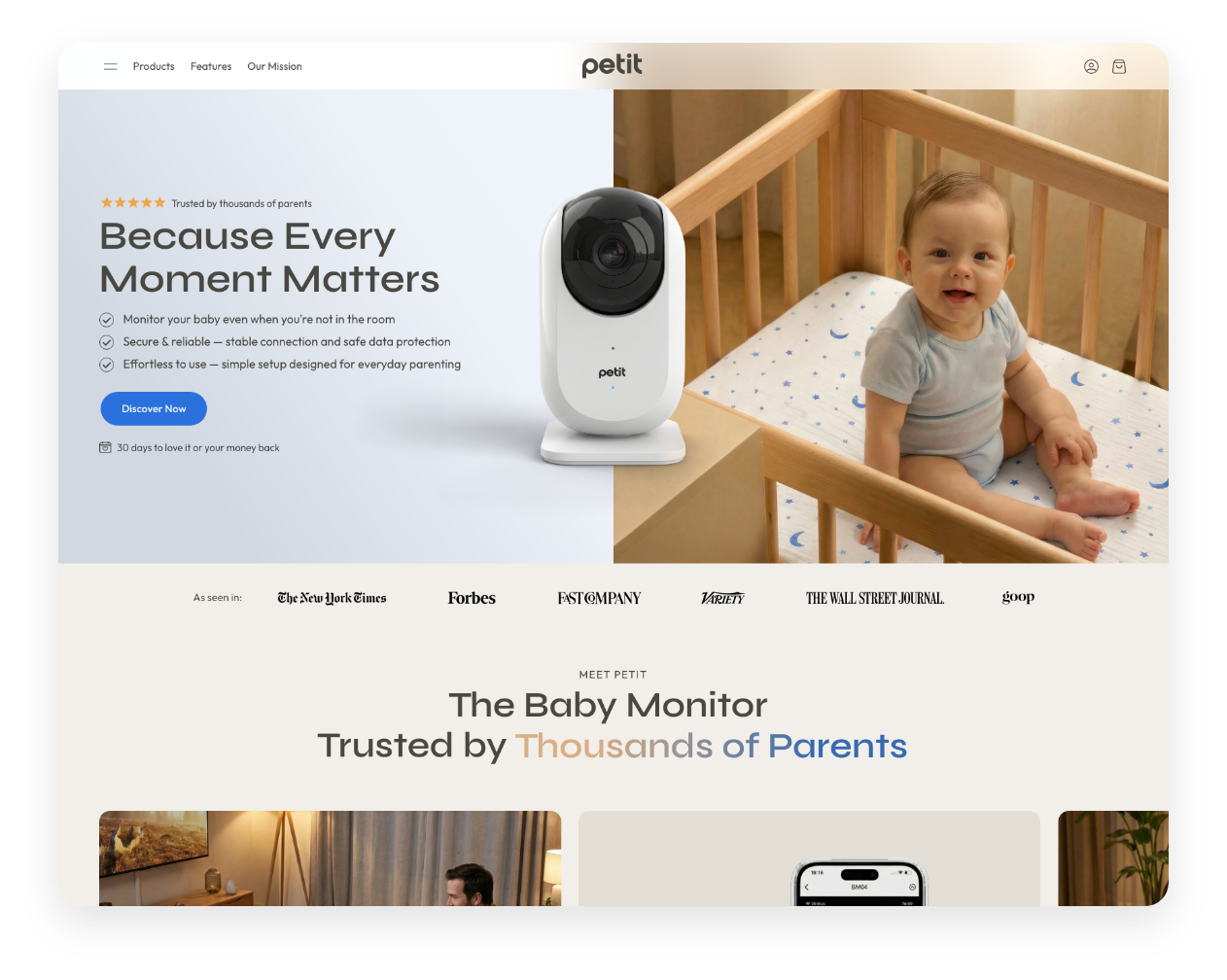
When Pawfolk, a mid-sized pet accessories brand, came to us with a conversion problem, their homepage looked like most e-commerce homepages do: a hero banner with a discount, a product grid, and a footer full of links nobody clicks. Traffic was solid. Bounce rates were brutal. The instinct was to tweak the offer or run a new ad creative, but we pushed for something harder — a full homepage audit with real user session data.
What the heatmaps revealed was clarifying. Visitors were scrolling past the hero in under two seconds, skipping the product grid entirely, and dying on the page around the third section. Nobody was confused about what Pawfolk sold. They were confused about why they should buy it from Pawfolk specifically. The brand had a strong identity in its founder's head and almost none of it on the screen. That's a positioning problem masquerading as a design problem — and it's more common than most DTC founders want to admit.
The new homepage was built around a simple principle: earn the next scroll. Every section had to answer a question the visitor was already silently asking. The hero stopped leading with a discount and started leading with a specific promise — "gear built for dogs who wreck everything" — targeted directly at the frustrated owners of high-energy breeds. That one line change, backed by a photo of a real customer's Lab chewing through a rope toy, dropped the bounce rate by 18% before we changed anything else on the page.
Below the hero, instead of a flat product grid, we introduced a "build your kit" flow that matched product categories to dog size and lifestyle. This wasn't a quiz — it was three clicks, surfaced inline. It reduced decision fatigue and immediately increased average session depth. Social proof moved up from a buried reviews section near the footer to just below the hero, featuring specific outcomes ("lasted 8 months with our Great Dane") rather than generic five-star praise. Each section was sequenced to match how a skeptical, busy customer actually thinks — not how a brand manager hopes they'll browse.

Three months post-launch, overall homepage conversion had gone from 1.1% to 3.4%. Revenue per session nearly doubled. But the metric that mattered most to the founder wasn't in the dashboard — it was the shift in customer emails. People were writing in saying they felt like the brand "got" them. That's what a well-sequenced homepage actually does: it makes a stranger feel understood before they've spent a dollar.
If you're sitting on healthy traffic and weak conversion, resist the reflex to cut prices or refresh your creative. Audit the sequence first. Ask what question each section is answering, and for whom. Nine times out of ten, the gap isn't in your offer — it's in how fast your homepage makes a visitor feel seen. Fix that, and the numbers tend to follow.